

In an age defined by accelerating interconnectedness, the idea of global friendship is no longer a poetic abstraction but a strategic necessity. Humanity now stands at the threshold of what futurologists describe as a “planetary phase,” where the boundaries between nations, cultures, and knowledge systems are increasingly porous. Within this emerging reality, the capacity to communicate across differences—linguistic, cultural, and epistemological—becomes a foundational skill for collective survival. The future is not merely something that happens to us; it is something we co-create through dialogue, empathy, and shared imagination. In this sense, global friendship is not sentimental idealism, but an infrastructure of the future, enabling cooperation in addressing challenges that no single nation can solve alone. As both a scientific and philosophical discipline, invites us to examine long-term trajectories of human civilization. It asks not only what technologies we will develop, but what kinds of relationships we will cultivate.
The answer depends on how we navigate the tension between universality and particularity. Language, in this context, becomes one of the most critical mediators of the future. It shapes not only how we communicate, but how we think, perceive, and relate to one another. Thus, initiatives that foster multilingual, culturally grounded communication are not peripheral; they are central to the architecture of a sustainable and inclusive global society. Within this global horizon, the Belitong UNESCO Global Geopark emerges as a microcosm of planetary possibility.
Situated within a landscape where granite formations meet maritime horizons, the geopark represents more than geological heritage. It is a living system where environment, culture, and community co-evolve. Here, the local is not isolated from the global; rather, it becomes a point of entry into it. Belitong offers a model of how places rooted in deep time can actively participate in shaping the future, contributing narratives, knowledge, and values to a shared human conversation.
It is within this context that the Belitong Geopark English Club takes on profound significance. Far from being a conventional language program, it operates as a bridge between worlds. Initiated by Muhammad Ali Akbar as a staff member of the Regional Civil Service and Human Resource Development Agency (BKPSDM), and Cecen Nurlita, a researcher in Green Governance. Together with the Belitong Geopark Management Body, they envisioned a platform that transcends conventional education.
and Cecen Nurlita, the club embodies a vision in which language becomes a medium of global friendship. English, often perceived as a global lingua franca, is recontextualized here as a tool for mutual recognition rather than domination. It enables participants to articulate local realities while engaging with global audiences, creating a two-way flow of understanding.
At its philosophical core, the initiative engages deeply with Sociolinguistics, particularly the question of how language mediates identity in an interconnected world. The challenge is not simply to learn English, but to inhabit it without losing oneself. This requires a delicate balance between adaptation and preservation. The Belitong Geopark English Club addresses this by grounding language learning in a local context, ensuring that global communication does not come at the expense of cultural integrity. Instead, it transforms English into a vessel for carrying Belitong’s voice outward, enriching global discourse with perspectives that might otherwise remain unheard.
Since its emergence in 2025, the club has evolved into a vibrant intellectual ecosystem. It brings together individuals from diverse backgrounds, creating a space where dialogue becomes a form of co-creation. Participants do not merely exchange information; they share experiences, question assumptions, and collectively construct new meanings. In doing so, they enact a form of global citizenship that is rooted rather than detached. The future imagined here is not one of disembodied cosmopolitanism, but of grounded interconnectedness, where individuals remain anchored in their local identities while engaging with the world.
The weekly gatherings of the club function as laboratories of the future. Each meeting becomes a site where participants rehearse the skills necessary for navigating a complex, interconnected world. Communication, critical thinking, and cultural sensitivity are not taught abstractly; they are practiced in real time. Language becomes an architecture of belonging, enabling individuals to situate themselves within multiple contexts simultaneously. In this way, the club contributes to the cultivation of “adaptive identities,” capable of evolving in response to changing global conditions.
A defining feature of the program is its embrace of linguistic complexity. Rather than simplifying local concepts to fit global language structures, participants are encouraged to explore the limits of translation. This approach resonates with the philosophy of Ludwig Wittgenstein, who emphasized that language shapes the boundaries of thought. By engaging with terms that resist direct translation, participants expand their cognitive horizons, learning to navigate ambiguity and difference. This process is not merely linguistic; it is deeply epistemological, challenging participants to rethink how knowledge is constructed and shared.
In attempting to express Belitong-specific ecological and cultural concepts in English, participants engage in a form of intellectual negotiation. They are not simply translating words, but interpreting worlds. This act of translation becomes a microcosm of global interaction, where meaning is continuously negotiated rather than fixed. It reflects a broader truth about the future: that understanding across cultures will depend not on perfect equivalence, but on the willingness to engage with difference. The initiative also aligns with broader principles of sustainable development, integrating language learning with environmental and cultural stewardship. In a future increasingly defined by ecological challenges, the ability to communicate local knowledge on a global stage becomes crucial. Communities like Belitong must be able to articulate their experiences, advocate for their needs, and contribute to global solutions. The English Club thus functions as a platform for empowerment, equipping participants with the tools to participate in shaping the future.
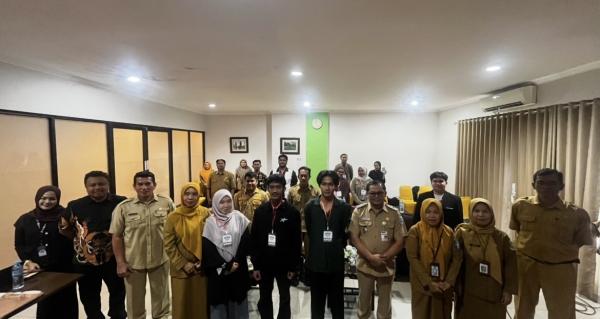
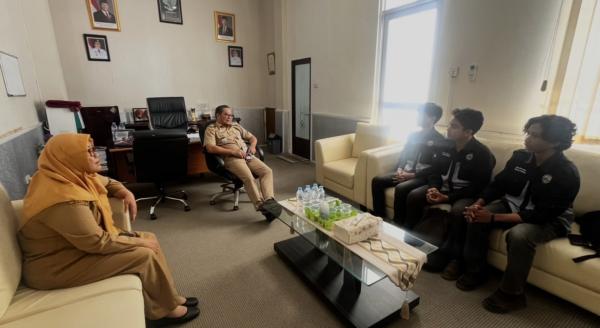
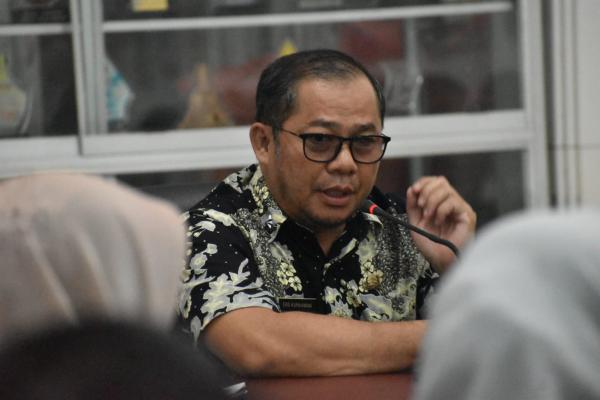
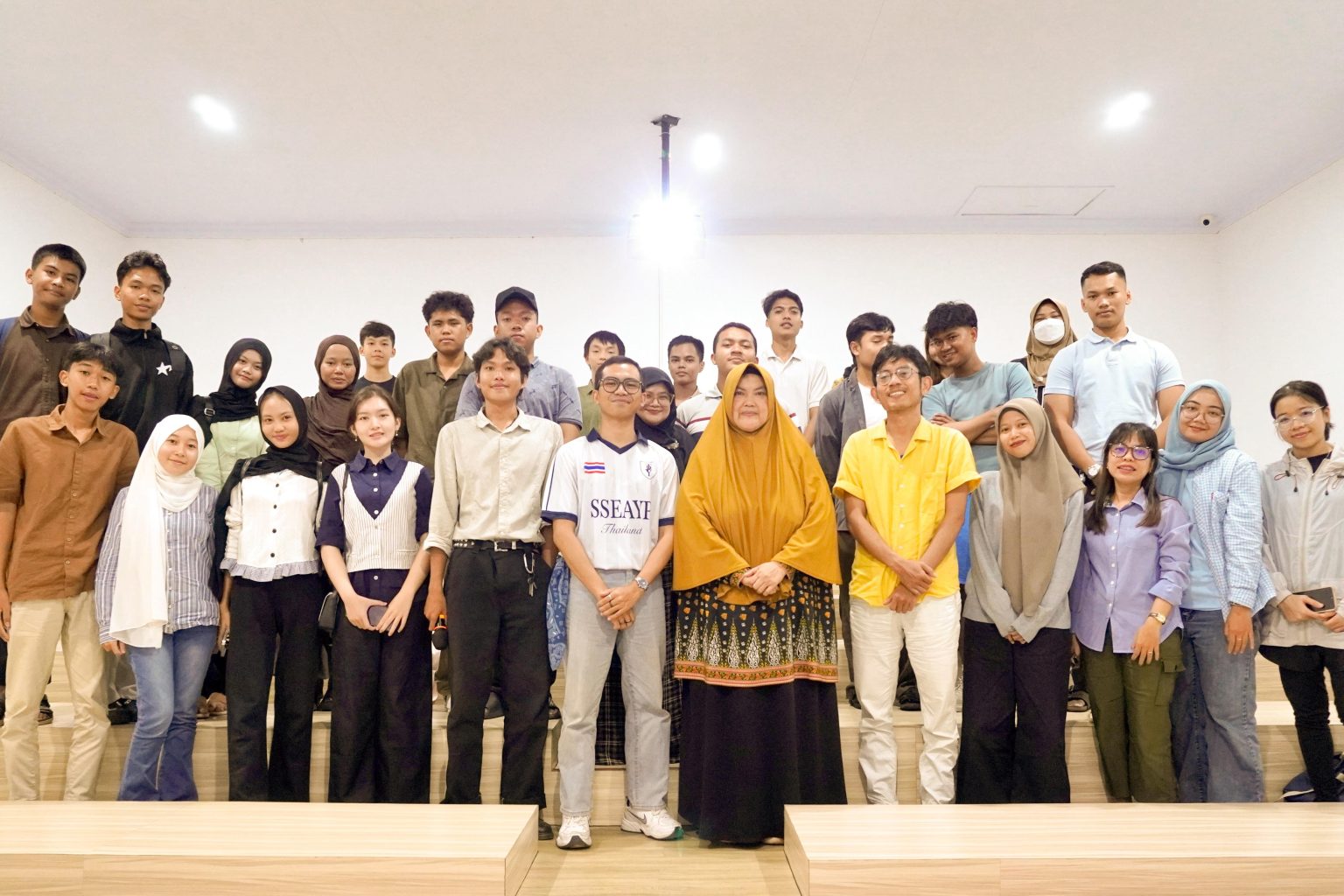
On April 10, 2026, the club hosted a significant gathering at the Belitong Geopark Information Center, titled Step Beyond Study Abroad and Global Experience Sharing Nurturing Our People Opening Doors to a Shared Future. The event served as a convergence of ideas, experiences, and aspirations, illustrating the transformative potential of global friendship in action. It was not merely a sharing session, but a space where futures were imagined collectively. Moderated by Mahdi Ardi Hasan, the discussion highlighted the role of geoparks as living educational systems. Mahdi articulated a vision in which learning is not confined to formal institutions but emerges from the interaction between people and place. This perspective aligns with futurological thinking, which increasingly recognizes the importance of decentralized, experiential learning in preparing individuals for an uncertain future.
Among the speakers, Yeni Srihartati, serves as an assistant I for Government and Social Welfare Affairs at the Regional Secretariat of East Belitung and is also a member of the Belitong UNESCO Global Geopark management body, offered a perspective shaped by her participation in the Intergovernmental Forum on Mining, Minerals, Metals and Sustainable Development in Geneva. Her experiences highlighted the complexities of global development, where economic and environmental considerations often intersect in challenging ways. By sharing her journey, she demonstrated how local voices can engage with global policy discussions, contributing to more inclusive and nuanced perspectives. Her academic experiences at Erasmus Universiteit Rotterdam, Netherlands and at Harvard University further illustrated the value of cross-cultural learning. These experiences enabled her to navigate multiple knowledge systems, enriching her understanding of both local and global contexts. Her reflections underscored the importance of intellectual mobility in the future, where individuals must be able to move between different frameworks of thought.
The narratives of Edwinnata and Negel Sigit added further dimensions to the discussion. Their international engagements across countries such as the United States, Russia, Vietnam, Japan, Singapore, and Thailand exemplify a generation that is inherently global in orientation. Their stories demonstrate how local identity can serve as a foundation for global engagement, rather than a limitation. The diversity of the audience further reflected the ethos of global friendship. Participants from various professional and social backgrounds came together, each bringing unique perspectives and experiences. This diversity is not incidental; it is essential. The future will require collaboration across disciplines, sectors, and cultures, and spaces like the Belitong Geopark English Club provide a model for how such collaboration can be cultivated.
Philosophically, the initiative can be understood through the lens of Phenomenology, as it emphasizes lived experience as the foundation of knowledge. It also resonates with Postcolonial Studies, challenging dominant narratives and asserting the value of local perspectives in global discourse. These frameworks highlight the deeper significance of the program, positioning it as both an intellectual and cultural intervention. The Belitong Geopark English Club represents a small but meaningful experiment in shaping the future. It demonstrates how local initiatives can contribute to global transformation, creating networks of understanding that extend beyond geographic boundaries. The future, in this sense, is not built solely through large-scale systems, but through countless small interactions that collectively redefine how we relate to one another.
Ultimately, the story of the Belitong Geopark English Club is a story of connection. It illustrates how language, when used thoughtfully, can become a bridge rather than a barrier. It shows that global friendship is not an abstract ideal, but a practice that can be cultivated in specific places, through intentional efforts. In this unfolding narrative, Belitong does not merely adapt to the future. It participates in creating it, offering a vision of a world where diversity is not erased, but celebrated, and where communication becomes the foundation for a more inclusive and sustainable global community.
In a quiet convergence of language, memory, and aspiration, this gathering reveals how a small local initiative can ripple into a wider architecture of global transformation—where knowledge is not merely transferred, but translated across cultures, generations, and ways of knowing. Like an ecosystem of ideas, each voice becomes a node in an expanding network of understanding that transcends geography, weaving Belitong’s lived realities into the larger fabric of humanity. Here, science meets story, and learning becomes an act of hope—an affirmation that even from the edges of the map, a community can illuminate pathways toward a more connected, conscious, and shared future.